Showing posts with label conferences. Show all posts

a Good to Great TO DO list

Below is a TO DO List Jim Collins gave each of us at Catalyst '11. it is awesome if we follow it.  These won't make a lot of sense without reading my previous 4 posts or hearing Collins' talk.

1  Go HERE and run the Good to Great diagnostic on you, your team, and your organization. This is a vital evaluation process.

Answer these Questions = how many seats do you have on your bus and what is your plan to have 100% of those seats filled with the right people in 1 year?

WHO will you allow to mentor me? Build a personal board of directors.

4  Get your personal HEDGEHOG right before it's too late. (a Good to Great principle = the coming together of your passion, design, and how you can make a difference.)

5  Once you have your Hedgehog, set your 20 mile march and stick to it! (Collins set weekly time goals.) What is your organization's 20 mile march?

Fire at least 6 new bullets by the end of the year. Navigate uncertainty with bullets.

Turn off electronic gadgets at least 2 days every 2 weeks. now that is a biggie! (it's impossible to "be present" with your iPhone in hand.) we need to be focused and gadgets rob us of our focs.

STOP Doing List. "True disciplined action is not what we choose to do, but what we choose not to do." *maybe you find it kind of ironic to have an item on your to do list that says "have a stop doing list" ? maybe humorous, but vital.

Double your reach to people half your age ALWAYS  by changing your practices without changing your values.

10  Set a BHAG that makes you really useful. (big hairy audacious goal)

creativity, innovation, & pioneering

i'm prepping to launch something. i'm going to pioneer something. it's a big grand vision. it could go splendidly awesome or it could be a complete bust. i have no idea.

so i perk up and pay special attention when gurus and experts like Jim Collins talk about STARTING something and about pioneering and innovation. (i perk up and listen when YOU talk about it too... promise.)

2 days ago i wrote about Collins' analogy for empirical creativity = fire bullets! and keep firing bullets until you hit the target. THEN shoot the cannon ball.

because if you fire the cannon ball 1st... *how many cannon balls can i fire with limited gun powder? (and that gun powder represents 100 different things)
SO, we need to test what we pioneer very carefully.

and fascinating thoughts around the whole idea of pioneering that i'd heard Jim say before...
*"Pioneering innovation is extremely important for society, but lethal for the innovator."

very encouraging words for someone prepping to do what i'm prepping to do. (psych. as the kids used to say.)

so being the pioneer on something is GOOD, but rarely works. the innovator dies off. but the thing may continue.

the thing is, i'm actually cool with that. i don't need my name on it. i'm gonna die off anyway. i'm more concerned that the mission continues.
which is good because 64% of pioneers "die" outright. i.e. - they don't see their innovation come through - although it does come through. (for example = the things Apple has "pioneered" failed for them. they were a bust. although that thing may be a success. the things Apple is successful with - they did not outright pioneer. interesting, eh?)

and we are ALL innovators. we are all creative. we create. we have ideas. some of us are even pioneers with that creativity.

BEFORE you try to argue with me and say you're not creative = think back to when you were 5 years old... we were all creatives when we were 5 years old! i promise you were. we were constantly creating when we were 5. it was natural.

somewhere along the way that maybe died off for you. it was suppressed by "the system" or by you personally. and now you're just disciplined but not creative.

back when we were 5 we were all creative but none of us were disciplined.

"Marrying creativity to discipline makes creativity come alive!"
- Jim Collins

and that is 1 of the greatest secrets i've ever heard. MARRY them. that's key. it's the only way. (i've got pages and pages of thoughts on this i just can't wait to drop out here.) What if SPACE for CREATING were built right into your 20 mile march? (wow is what.)
basically we need to marry the 5 year old US and the 25 or 35 or 45 year old US. disciplined in our creativity and creatively disciplined.

then there will be more innovation. more PROBLEMS being solved. the world will keep changing. there will be more PIONEERS.

and i promise - if the thing/mission you pioneer is WORTH DOING and IT succeeds, but you don't - it's ok. 

if it's worth doing then just do it.

straight butta

"straight butta" is what we used to call something back in the day that was just amazing. it was so smooth and "pimp" that only the phrase "straight butta" would suffice to describe it's awesomeness.

so this stuff below from Jim Collins' talk at Catalyst '11 a few weeks ago is straight butta. my last couple (and the next) blogs have been thoughts from that talk and these thoughts below are the random ones that don't really fit into a topic.
so the topic for these thougths is "straight butta" - because that's what they are.

ya feel me?

The signature of mediocrity is Chronic Inconsistency!
This is true when you look at areas of your life or organizations across the world. Chronic inconsistency (or i would be witty and say consistent inconsistency) can be found in the mediocre leaders and organizations everywhere you look.

Collins says that VALUES are what can remain consistent. only VALUES endure. therefore, the bottom line from his 1st book (which is really a SEQUEL to Good to Great), Built to Last, is "Preserve the Core AND Stimulate Progress."

*which is what missional churches and contextualizing "missionaries" have been trying to do for hundreds of years.

The KEY is understanding the difference between practices and values. Change 1, never the other.
never changing values but ever changing practices can make something enduring and great!
wow - that feels like a direct address to churches & missional people. it feels as though it applies to us twice as much as business organizations. unfortunately, we're pretty bad at it.

Collins once asked the famed Peter Drucker (who happened to be Collins' mentor) which of his 26 books he was most proud of? - Drucker answered, "The next one." [i love that]

Andy Stanley interviewed Collins (again) at the end of his talk. he mainly talked about the difference between RIGOROUS and RUTHLESS cultures. especially as it relates to people in the seats on the bus (in our orgs) / firing people who don't need to be on our bus/ moving people who are in the wrong seat.
A rigorous culture is all about service to the cause. We make big RIGOROUS decisions for the sake of the cause - the sake of the mission. we should ask the question "what REALLY is compassion in this situation?" many times, firing is the most compassionate (yet hardest) thing we could do.
because if someone is failing in a seat, they're not in their Hedgehog (a Good to Great idea) - so helping them is getting them out of that seat. fast.

well, i wrote a lot more random thoughts into this "straight butta" article, BUT they just developed into blogs all by themselves. so, tomorrow i'll share some more "straight butta" Collins had to share on CREATIVITY.

3 traits in great leaders

those 3 traits of great leaders (according to Jim Collins) are:
FANATIC DISCIPLINE
EMPIRICAL CREATIVITY
PRODUCTIVE PARANOIA

you can catch up on the 1st trait in yesterday's post HERE. + you have to read that 1st post to understand the framework story used to show these 3 traits = the 2 teams and their leaders racing to the South Pole.

2  EMPIRICAL CREATIVITY
When most leaders are unsure or in a time of chaos - they don't know what to do so they just do what others are doing/have done in the past. that's our natural response as average and even good leaders.

great leaders figure out how to marry their creativity with empirical data = combine their creativity with what is PROVEN to work (not just what others are doing/have done). make sense?

they work hard to figure out what WORKS. maybe it's not the most popular method... in fact it's probably not or else we wouldn't be in the time of chaos or season of being unsure.

i would prefer to call this CREATIVE PRAGMATISM. Jim's phrase sounds smarter, but mine makes more sense to me.
it's the realization that i am NOT smart enough to outsmart this, but there are people with empirical, practical evidence.

and then you make your move based on this empirical, creative pragmatism.
and looking in from the outside - the moves these leaders make may appear to be rash, crazy, BOLD decisions... but they are simply creative decisions based on the empirical evidence of what works.

and i LOVE Collins' analogy around this - it is EXTREMELY relevant to me in this moment of my life. he said it's like a ship back in the day at war on the open seas with another ship.
they can straight up fire a couple cannon balls to blow up the other ship -- but if their aim is off just a few degrees... and they miss... well, they're out of gun powder. you only have enough "powder" to fire a few cannon balls.
so, the better way is to fire bullets. test shots. get the right trajectory and then fire the cannon ball with all that gun powder you still have left.

try with a little. and again. and again. then you hit the mark... THEN go big. that's empirical creativity.

3  PRODUCTIVE PARANOIA
in an uncertain world you really do have to be prepared for what you can't predict.
These great leaders are always sitting around wondering "what if" -- while channeling that energy into being PRODUCTIVE!
(most of us do just the opposite = paranoia & "what if" wondering paralyzes us and we do nothing.)

the team who actually made it to the South Pole put out 10 mile wide black markers at every depot stop! and you better believe they didn't miss a single one. THAT is productive paranoia.
(the other team just put a flag on top of the depot itself. they all died.)
some famous guy, CEO of a company - can't even remember who, but he had an awesome quote = "We predicted 11 of the last 3 recessions." = again, THAT is productive paranoia. that company was OK in every single recession. they're still doing fine. (wish i could remember who it was?)

they were being (some might say) OVERLY paranoid. but it was productive paranoia, so they put plans in place and they have been OK in every single recession.


so, the GREAT leaders have Fanatic Discipline, Empirical Creativity, and Productive Paranoia

i have a lot to still be developed in me. how are YOU doing with these 3 in YOUR leadership?

tomorrow i'll post more leadership takeaways from Collins & on Thursday i'll post the 10 point TO DO list he gave all of us!

20 mile march'n it again...

One of my last posts before Keira was born was this below - my thoughts from Jim Collins' awesome talk at Catalyst 2011. i was going to post the rest of my thoughts on it the next week, but Keira had other plans. that was about 3 weeks ago now! so i'm reposting the 1st one below and i'll follow up with the rest tomorrow.

diving back into my 20 mile marches myself, so this is good for me to dive back into & keep writing tomorrow...

when it comes to greatness there are 3 inherent traits that set GREAT leaders apart from the others...
& These are according to Jim Collins' STELLAR talk at Catalyst '11 last week. (and probably from his newest book Greatness is a Choice)

i'll just give you those big 3 traits straight up & then explain what he was talking about as we go:

1  FANATIC DISCIPLINE
2  EMPIRICAL CREATIVITY
3  PRODUCTIVE PARANOIA
The story and framework he chose to build this talk around was a study of the 2 teams who were in a race to make it to the South Pole back in the early 1900s. the leader whose team made it exemplified each of these 3 traits. the leader whose team all DIED did not.
each leader and each team faced the SAME environment and the SAME circumstances... one made it and one DIED. these 3 traits made the difference... and they make the difference in a long line of Great vs. Good leaders and Great vs. Good organizations.
Here is a little more context and discussion around these 3:
1  FANATIC DISCIPLINE
Jim told a (made up) story as a GREAT example of this trait. Let's say there are 2 guys who are going to walk from the California coast all the way across the country to the East coast of Maine. that's a long walk. they both set out on the same day.
The 1st guy sets a pace for himself of 20 miles per day. he is committed to his 20 mile march. he is fanatically disciplined about it. the 1st day he walks 20 miles. the 2nd day he walks 20 miles. the 3rd day he completes 20 miles and is tempted to keep going... he feels good, the sun is still up, he can probably walk 40. but nope. he sticks to the 20 mile march. he hits Colorado and there is snow all over the ground and he wakes up early and wants to sleep in inside his tent... but he does his 20 mile march. no matter what. fanatic discipline.
he makes it to Maine.
The other guy just gets after it. he walks 40 miles the 1st day. then blazes ahead for 57 miles on the 2nd day! he's dead tired on the 3rd day so he just sleeps in and lays around all day knowing that he can make up the ground later. he hits the snow in Colorado exhausted and takes a 3 week break to let the weather clear up. he hits the trail again and does 60 miles, but can barely walk the next day. he never makes it to Maine.
the team who made it to the South Pole had a 20 mile march and their leader made them stick to it no matter what.
THAT is fanatic discipline.
and that is what i need. 
for those of you familiar with Good to Great, this is a repackaging of the FLYWHEEL principle.
my main takeaway = i desperately need to KNOW what my 20 mile march is. i'm going to spend the time and the hard effort to land on the right 20 mile march for every area of my life and then i'm going to freaking hit it every single time... no matter what!
we'll talk about the other 2 traits in the coming days, but for now - anybody know their 20 mile march?

20 mile march

when it comes to greatness there are 3 inherent traits that set GREAT leaders apart from the others...
& These are according to Jim Collins' STELLAR talk at Catalyst '11 last week. (and probably from his newest book Greatness is a Choice)

i'll just give you those big 3 traits straight up & then explain what he was talking about as we go:
1  FANATIC DISCIPLINE
2  EMPIRICAL CREATIVITY
3  PRODUCTIVE PARANOIA

The story and framework he chose to build this talk around was a study of the 2 teams who were in a race to make it to the South Pole back in the early 1900s. the leader whose team made it exemplified each of these 3 traits. the leader whose team all DIED did not.

each leader and each team faced the SAME environment and the SAME circumstances... one made it and one DIED. these 3 traits made the difference... and the make the difference in a long line of Great vs. Good leaders and Great vs. Good organizations.

Here is a little more context and discussion around these 3:
1  FANATIC DISCIPLINE
Jim told a (made up) story as a GREAT example of this trait. Let's say there are 2 guys who are going to walk from the California coast all the way across the country to the East coast of Maine. that's a long walk. they both set out on the same day.

The 1st guy sets a pace for himself of 20 miles per day. he is committed to his 20 mile march. he is fanatically disciplined about it. the 1st day he walks 20 miles. the 2nd day he walks 20 miles. the 3rd day he completes 20 miles and is tempted to keep going... he feels good, the sun is still up, he can probably walk 40. but nope. he sticks to the 20 mile march. he hits Colorado and there is snow all over the ground and he wakes up early and wants to sleep in inside his tent... but he does his 20 mile march. no matter what. fanatic discipline.
he makes it to Maine.

The other guy just gets after it. he walks 40 miles the 1st day. then blazes ahead for 57 miles on the 2nd day! he's dead tired on the 3rd day so he just sleeps in and lays around all day knowing that he can make up the ground later. he hits the snow in Colorado exhausted and takes a 3 week break to let the weather clear up. he hits the trail again and does 60 miles, but can barely walk the next day. he never makes it to Maine.

the team who made it to the South Pole had a 20 mile march and their leader made them stick to it no matter what.

THAT is fanatic discipline.

and that is what i need. 

for those of you familiar with Good to Great, this is a repackaging of the FLYWHEEL principle.
my takeaway = i desperately need to KNOW what my 20 mile march is. i'm going to spend the time and the hard effort to land on the right 20 mile march for every area of my life and then i'm going to freaking hit it every single time... no matter what!

we'll talk about the other 2 traits in the coming days, but for now - anybody know their 20 mile march?

greatness

One of the 1st lines in Good to Great  that wrestles you down and grabs your attention is:

“Greatness is not a matter of circumstance.  Greatness is largely a matter of conscious choice."

That is what i am talking about. that is echoes of my Father & Grandfather from years past.

and that is one of the lines Jim Collins kicked off his stellar Catalyst '11 talk with last week. for me, it was the best talk of the whole conference.
a lot of it was great reminders after reading Good to Great a few years ago, but those in-your-face reminders have kicked my butt back into gear. but some of it was also reframed in different ways - probably from his newest book Greatness is a Choice. (that i can't wait to devour, btw.)

so, back to that statement. "Greatness is not a matter of circumstance. Greatness is largely a matter of conscious choice."
we can see that from the pure data/evidence. because if 2 organizations are in all the same circumstances and 1 stays good while the other goes to great... obviously something they did made the difference.

WHAT makes that difference though? why do some leaders and organizations thrive in chaos? it is NOT what happens to you; it's the choices, actions, and disciplines you choose.

the rest of his talk was about a lot of those choices, actions, and disciplines that makes a great leader. 
and it was all pure gold. i'll be breaking it down and processing my takeaways from it here at renown the next few days, but for now i'll just leave you with another sliver...

It all starts with PEOPLE.

Get the right people on the bus. that's the famous chapter/phrase from Good to Great. it's all about the right people on the bus and then having those people in the right seat. So...

Try to change every WHAT question to a WHO question.

and that's just 1 of the 5 principles that cause leaders and organizations to go from good to great, but i think if we rigorously acted on just this one... wow. there would be a world of difference.

and this may seem off topic but it was a simple/profound/brilliant quote in context. because a lot of times we make bad people decisions... but we have good intentions... our hearts are good...
"Bad decisions made with good intentions are still bad decisions."

yep. right on Jimmy. more coming soon. and it's all the really good stuff. i'm saving it.

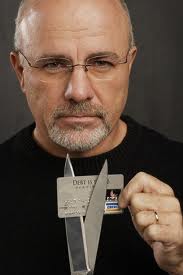
dave ramsey's talk part 2

this is part 2 of my takeaways from Dave Ramsey's talk at Catalyst 2011 last week. you can read part 1 HERE.

the continuation of Dave's Core philosophies for his organization
5 Things that Caused Us to Win

3  Slow and Steady Matters 
do not let your pace go faster than your resources.
i love this simple line of thinking that i need to be reminded of SO often = "Either God is gonna send me the money to do the deal... or i'm not gonna do the deal." simple as that. i needed that.

this principle is echoes the children's story of The Tortoise and the Hare. we live in a culture full of Hares, but every time i read the book the Tortoise wins the race. there's something to that.
i'm definitely a Hare though. trying to sprint in this marathon. i don't know what it takes to remind myself and discipline myself to be slow and steady.
nothing happens fast. START today, but it's a marathon. just go at it slow and steady every day. and then one day...
4  Financial Principles in Your Organization Matter
Dave said, "you didn't think i was going to talk all this time and not mention money at least once did you?"
to be honest, i was still writing about #s 1-3 and pretty much missed everything he said about this. just being honest.

5  A Higher Calling Matters
if we're in it for something beyond the money then that makes a big difference in our org. we get a date on our tombstone that we're born and a date on our tombstone when we die. hopefully mine looks something like 1982 - 2080.
Dave repeated a question about this that could seem cliche, but in context it was not:
"what are you going to do with the dash?"

more great stuff from Catalyst 2011 on the way.

let the takeaways begin

i was at Catalyst 11 last week. awesome as always.
last year i was in Kenya and it was the 1st Catalyst conference i had missed since 2006.
i love Catalyst a lot and value it big time because of what it always produces in me.

maybe more on the conference as a whole later. for now, i'm just going to dive right into processing my learnings and takeaways. really for my sake, but if it works out great for you to have some "2nd hand learning & growth" then that's awesome too.

i'm processing Dave Ramsey's talk from day 1 right now. (i don't even feel the need to take time giving my props and gratitude to Dave for all he's done for us... you can just read HERE, HERE, and HERE if you must.)
for me, his talk was probably the 3rd best talk of the week. i love his leadership stuff as much as his $ stuff. and he gave ALL 13,000 of us a FREE copy of his book that just released, Entreleadership. (now i can take mine back to the library.)

he spoke about his organization's 5 core philosophies or core values. he simply called them:
5 Things that Caused us to Win

1  People Matter - There is a high correlation between success and relational IQ.
i see this big time everywhere i look. everything i've ever read or experienced myself backs this up.
opportunities come through people. plain and simple.
it was awesome to hear Dave talk about how amazing they treat their people that work for them. that's why they work so hard to hire the right people who will be around for a long time... because they are going to POUR into them & treat them right.

2  An Incredible Team that Demands Excellence Matters 
Pretty cool reminder that Dave's 1st step in their hiring process is to PRAY. his prayer = "Lord, keep your crazy children away." lol. start praying ahead of time for God to send us the right one. *Because we don't want anyone on our team who is working a J.O.B.

definitely some pretty funny, quotable 1 liners when Dave was talking about this section:
"I don't put up with drama. I'm not running a beauty parlor... I want to GET THINGS DONE!"
He said people tour their place all the time and say "wow. all your employees are such nice people." Dave replies, "That's right... we fire the other ones."

Dave's always good for some brilliant leadership principles + a laugh or 2 in the middle of it. i'll drop the next 3 values on you tomorrow. until then, What do you think of these first 2 so far?